Detailed overview of 12 metro lines with a total over 600 km, connecting the major urban areas of Ho Chi Minh City.
According to TPO, following the success of Metro Line 1 (Ben Thanh – Suoi Tien), Ho Chi Minh City is considering extending this line to Binh Chanh District, while simultaneously promoting the construction of 11 additional metro lines with a total planned length exceeding 600 km.
These routes will form a dense network connecting residential areas and new urban zones across the entire city, including extended sections reaching suburban districts such as Can Gio and Cu Chi.
In the Ho Chi Minh City Urban Development Master Plan for 2021–2030 (with a vision to 2050), the strategy clearly emphasizes the formation and expansion of urban areas based on a TOD (Transit-Oriented Development) model centered around the metro system. Another key goal is to enhance connectivity with the southeastern region while establishing a modern urban railway network that links multiple mixed-use hubs, satellite cities, and industrial zones. Additionally, the city aims to develop supporting railway-related industries, including manufacturing and production of metro equipment and components.
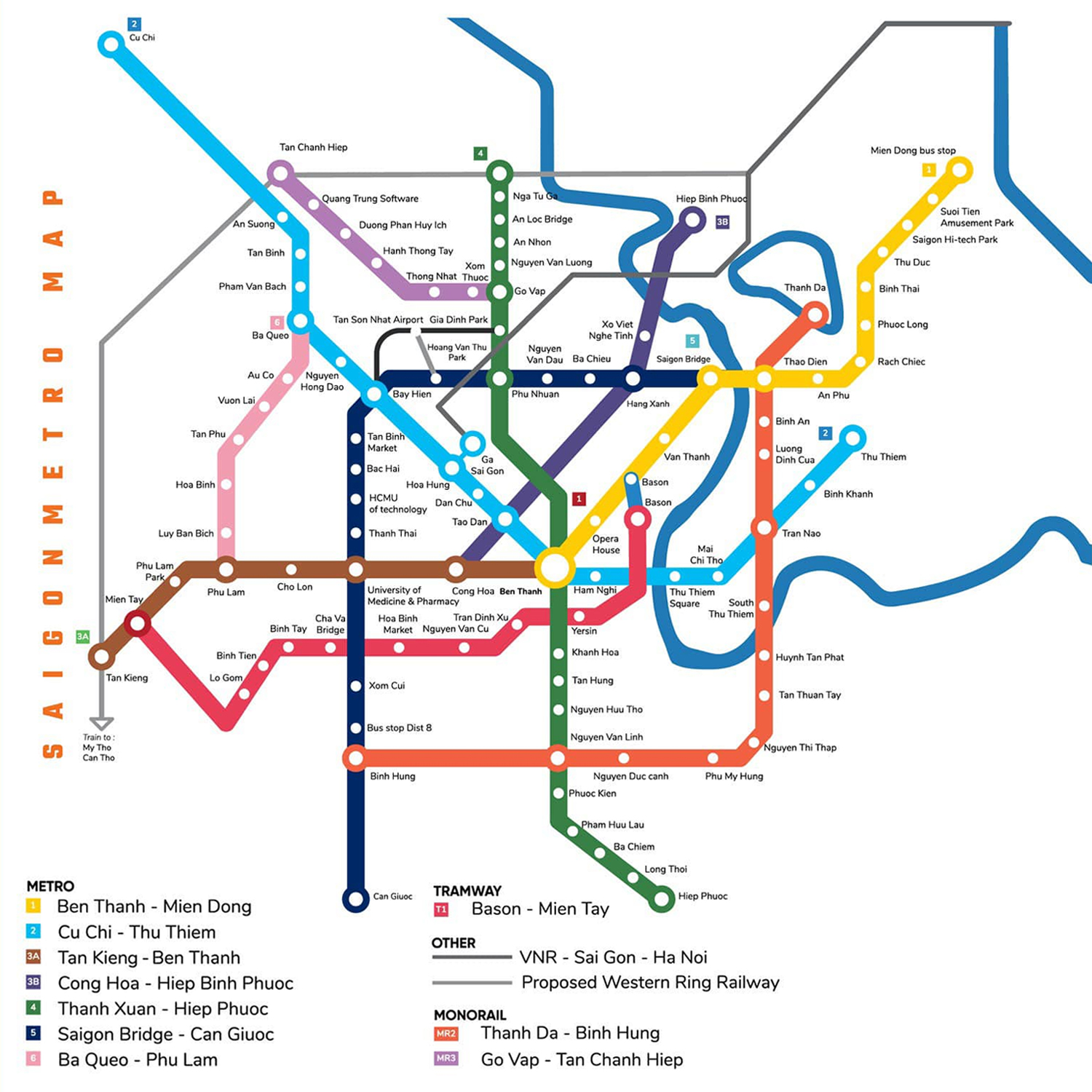
Specifically, Ho Chi Minh City plans to construct 7 metro lines crossing the urban core, 2 ring (belt) metro lines, 1 riverfront LRT/tramway line, and 1 MRT/LRT line connecting the Can Gio coastal reclaimed tourism city.
The detailed information of the 12 planned urban railway lines in Ho Chi Minh City is as follows:
Metro Line 1
An Ha (Binh Chanh District) ↔ Long Binh Depot (Thu Duc City) — 40.8 km total
Currently, the 17.1 km section from Long Binh Depot to Ben Thanh Market has been opened first and is in operation.
The next phase will extend the line from An Ha – Hoa Binh – Lanh Binh Thang – 3/2 Street – Ly Thai To – Nga Sau Cong Hoa – Pham Viet Chanh – Cong Quynh – Pham Ngu Lao – to Ben Thanh Market to connect with the existing section.
Metro Line 2
Thu Thiem (Thu Duc City) ↔ Binh My Depot (Cu Chi) — 62.2 km total
Main stations: Thu Thiem – Mai Chi Tho – Ben Thanh – 23/9 Park – Pham Hong Thai – Cach Mang Thang Tam – Truong Chinh – Tham Luong Bridge – An Suong Bus Station – National Highway 22 – Binh My Depot.
Metro Line 3
An Ha (Binh Chanh) ↔ Hiep Binh Phuoc Depot (Thu Duc City) — 45.8 km total
Route: An Ha – Le Minh Xuan – Tan Kien Station – National Highway 1 – Kinh Duong Vuong – Hong Bang – Hung Vuong – Nga Sau Cong Hoa – Nguyen Thi Minh Khai – Xo Viet Nghe Tinh – National Highway 13 – Hiep Binh Phuoc Depot.
Metro Line 4
Dong Thanh (Hoc Mon) ↔ Hiep Phuoc New Urban Area (Nha Be) — 47.3 km total
Route: Dong Thanh – Ha Huy Giap – Nguyen Oanh – Nguyen Kiem – Truong Son – Nguyen Van Troi – Nhieu Loc Canal – Hai Ba Trung – Pasteur – Ben Thanh – Tran Hung Dao – Nguyen Thai Hoc – Nguyen Huu Tho – Ba Chiem Bridge – Hiep Phuoc New City.
Metro Line 5
Hung Long University Urban Area (Binh Chanh) ↔ Vinhomes Grand Park / Song Tac Bus Terminal (Thu Duc City) — 53.9 km total
Route includes two branches:
• Branch 1: Vinhomes Grand Park
• Branch 2: Song Tac Bus Terminal
Metro Line 6 (Inner Circular Line)
Passing Thu Duc City, District 7, Binh Chanh and multiple inner districts — 53.8 km total
Elevated along Vo Chi Cong with rail spurs connecting Phu Huu Station to Thu Thiem – Long Thanh Railway.
Metro Line 7
Tan Kien Station (Binh Chanh) ↔ Long Binh Depot (Thu Duc City) — 51.2 km total
Passing Phu My Hung, Thu Thiem, Thao Dien, Thanh Da, High-tech Park, Vinhomes Grand Park.
Metro Line 8
Da Phuoc (Binh Chanh) ↔ Binh My (Cu Chi) — 42.8 km total
Serving Quang Trung Software City, Hoc Mon area.
Metro Line 9
Binh Trieu Station (Thu Duc City) ↔ An Ha Depot (Binh Chanh) — 28.3 km total
Metro Line 10 (Outer Ring Line)
Thu Duc City ↔ Nha Be ↔ Binh Chanh ↔ Hoc Mon — 83.9 km total
Connected to Hi-Tech Park, Cat Lai Port, Tan Tao Industrial Park, etc.
LRT / Tramway Line 11 (Riverfront Tourism Line)
Western Bus Station (Binh Tan) ↔ Cu Chi — 48.7 km total
MRT/LRT Line 12 (Can Gio Connection Line)
District 7 ↔ Can Gio Coastal Reclaimed New City — 48.7 km total
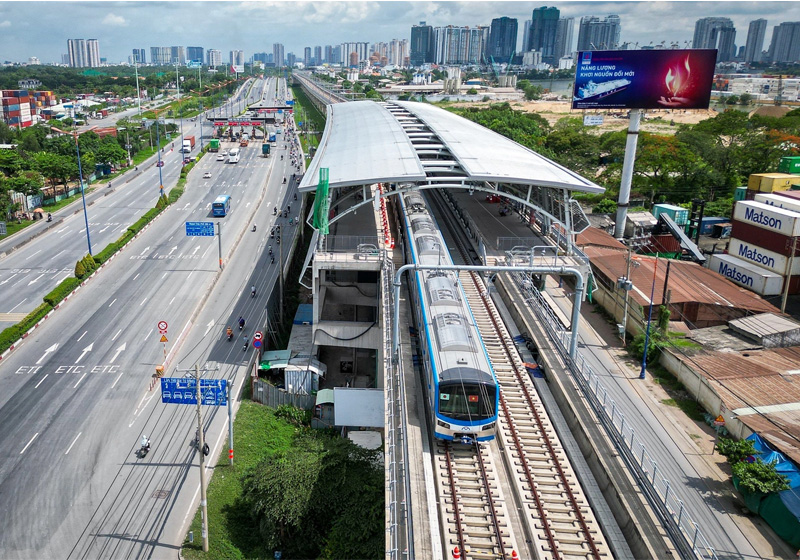
Additionally, Ho Chi Minh City’s metro network will be interconnected with metro lines in neighboring provinces such as Dong Nai, Binh Duong, Long An, and Tay Ninh, contributing to the promotion of economic growth across the surrounding regions.
According to the Prime Minister-approved content in the Ho Chi Minh City Development Plan for 2021–2030 (vision to 2050), the city aims to establish the core framework of its urban railway system by 2030 and complete the entire metro network by 2050.
Tin xem nhiều
 02/01/2026
Sun Group proposes a land swap of 360 hectares in exchange for constructing the Rach Chiec Sports Complex.
Chính chủ cần chuyển nhượng gấp căn 2 ngủ diện tích thông thủy 78m2 full đồ, khách mua chỉ cần dọn quần áo đến có thể ở ngay
INDOCHINE ACHIEVES MAJOR SUCCESS AT THE HAPPY ONE MORI PROJECT AS THE NORTHERN MASTER DISTRIBUTOR
Can Foreigners Own Property in Vietnam? A Complete Guide to Real Estate Ownership
INDOCHINE Proudly Appointed as Master Distributor for The Win City – High-Rise Mixed-Use Development in Western Saigon
Indochine is proud to be the master distributor of the Happy One Mori project.
Indochine partners with the developer to introduce La Pura to the international market.
The Global City – Urban Township in District 2
Real Estate Market Along National Highway 13 Sees Strong Growth… A Golden Opportunity for Foreign Investors
Vietnam Rental Yield: Ho Chi Minh City
INDOCHINE Ready to “Ride the Waves” at THE MERIDIAN Da Nang Launch Event — “The Maiden Voyage”


